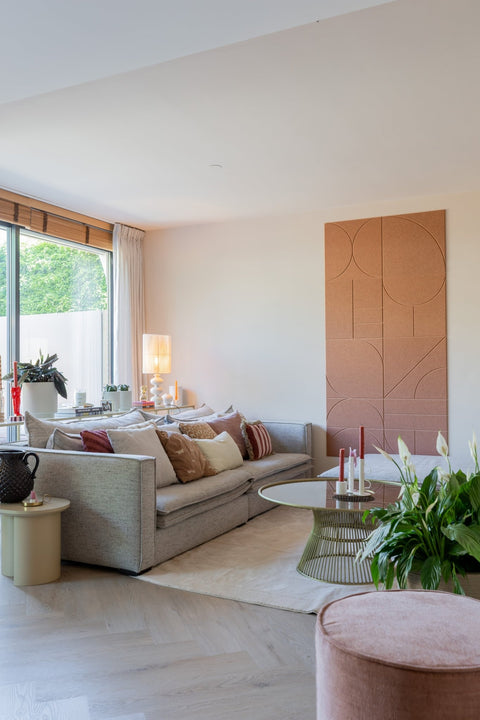
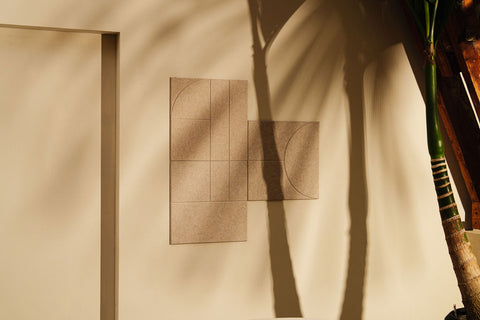
We’re often asked what the difference is between the wooden wall panels and the felt version. We’re happy to explain it to you in the blog below!
1. Improved Acoustic Properties
-
Solid felt panels:
Felt panels that are 9 mm thick or more offer superior sound absorption, as the entire surface of the panel can absorb and dampen sound. This makes them particularly effective at reducing reverberation and improving room acoustics. For consumers, we offer 9 mm panels, and for the commercial market, we offer panels up to 18 mm thick, including 4 cm of polyester wool. That amounts to 58 mm of sound-absorbing material. -
Wooden panels with felt:
With wooden panels, sound is absorbed only by the felt located behind the wooden structure. The wood itself reflects some of the sound, making the overall acoustic performance less efficient.
2. Sustainability and Environmental Friendliness
-
Solid felt panels:
Felt panels are often made from recycled PET material, such as plastic bottles. This makes them a sustainable choice that helps reduce plastic waste. They are also recyclable at the end of their life cycle. -
Wooden panels with felt:
Although wood is a natural material, cutting down trees results in a larger ecological footprint. The use of adhesives and finishes can further reduce its sustainability. The MDF version widely available today can even swell when exposed to water.
3. Lighter and Easier to Install
-
Solid felt panels:
Felt panels are lightweight and flexible, making installation easier and faster. They can be easily attached to walls or ceilings without the need for heavy-duty structures. Thanks to their self-adhesive backing, installation is extremely simple and can be done by a DIY enthusiast without any tools. -
Wooden panels with felt:
Wooden panels are heavier and require a more robust installation. This makes installation more labor-intensive and expensive. To achieve the same acoustic performance, a larger surface area is needed. This is compensated for by incorporating the panels into the ceiling height. This often requires sawing or cutting, which complicates the installation.
4. Flexibility in Design
-
Solid felt panels:
Felt panels offer a wide range of design options. They are available in various colors, shapes, and patterns, making them ideal for creative and unique interior design applications. In addition, they can be easily cut to size without compromising functionality. -
Wooden panels with felt:
The design of wooden panels is limited by the wood grain. Although there is some variation in finish, it offers less flexibility than solid felt. Some people also find the striped pattern of the wooden slats distracting. Ultimately, it comes down to personal taste.
5. Ease of maintenance
-
Solid felt panels:
Felt panels are easy to clean with a vacuum cleaner or a damp cloth. They retain their appearance and acoustic performance without requiring intensive maintenance. -
Wooden panels with felt:
Wood requires regular maintenance, such as polishing or treating it to protect against moisture and wear. This increases the time and cost in the long run.
6. Cost advantage
-
Solid felt panels:
Because felt panels are made from a single material, they are often more affordable to manufacture and install. This makes them a cost-effective solution without compromising on quality. -
Wooden panels with felt:
Wooden panels are generally more expensive due to the complexity of the design and the materials used.
7. Safety
-
Solid felt panels:
Our felt panels made of PET material are Class B fire-retardant, which contributes to the safety of the space. They can be easily installed in your home or office. -
Wooden panels with felt:
Wood is naturally more flammable and requires special treatments to meet the same standards.
Conclusion
Felt panels offer clear advantages over wood panels with a felt backing. They are more effective at sound absorption, more environmentally friendly, lighter, more versatile in design, and easier to install. In addition, they offer excellent value for money, making them a smart choice for anyone who values both functionality and aesthetics.
With our felt panels, you’re not only choosing high-quality acoustic solutions, but you’re also helping to create a more sustainable world.