What is reverberation time?
Reverberation is the phenomenon in which sound continues to bounce around a room after the original sound source has stopped. The time it takes for the sound level to decrease by 60 decibels (dB) is called the reverberation time. This is often referred to as RT60.
Reverberation is a natural phenomenon caused by sound waves reflecting off surfaces such as walls, ceilings, and floors. In some spaces, such as concert halls or churches, a certain degree of reverberation is desirable to give the sound a full and rich character. In other situations, such as offices, classrooms, or living rooms, too much reverberation can be disruptive and negatively affect the intelligibility of speech or music.
How is reverberation time measured?
Reverberation time is measured by producing a sudden sound, such as a bang, in the room. The rate at which the sound level decreases is then measured. Special acoustic measuring equipment and software are used for this purpose. The reverberation time depends on various factors, such as:
- The size of the room: Larger rooms typically have a longer reverberation time because the sound takes more time to spread and bounce back.
- The materials in the room: Hard surfaces such as concrete, glass, and metal reflect sound, while soft materials such as carpet, curtains, and acoustic panels absorb sound.
Why is reverberation time important?
Reverberation time has a major influence on how we perceive sound in a room. A reverberation time that is too long can lead to a cluttered and unpleasant sound experience. This is particularly problematic in spaces where speech intelligibility is crucial, such as classrooms, meeting rooms, and theaters.
On the other hand, a reverberation time that is too short can make a space feel acoustically “dead,” which is undesirable in music studios or concert halls, for example.
How can you optimize reverberation time?
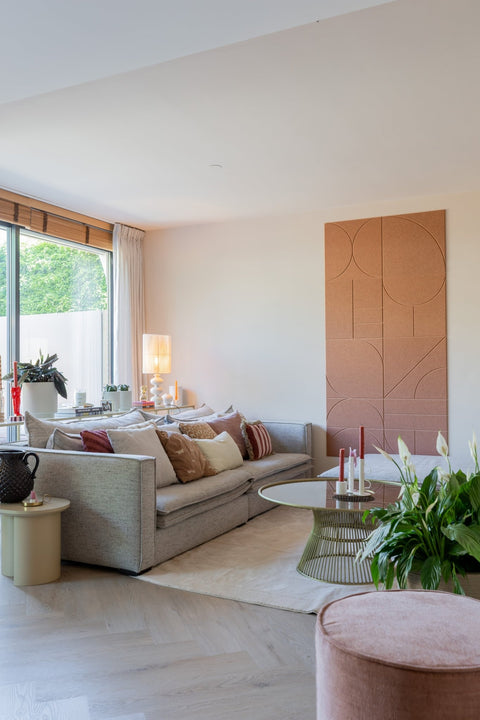
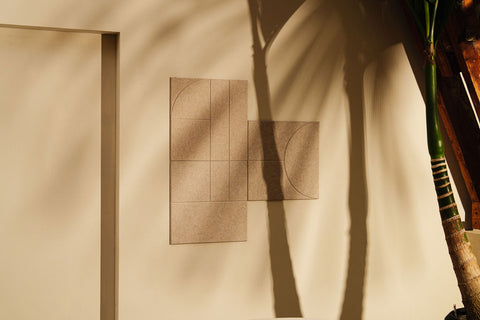
To control reverberation time, you can use sound-absorbing materials such as PVC acoustic wall panels. These panels, featuring tiny holes, are designed to absorb sound waves and reduce reverberation. Additionally, adding furniture, carpets, and curtains can contribute to better acoustics.
Optimizing reverberation time contributes to a pleasant and functional sound environment, regardless of the room’s purpose. Whether you want a quiet workspace or are seeking an optimal listening experience, controlling reverberation time is essential.
In ons standaardassortiment hebben 9mm zelfklevende PET vilt panelen. Voor maatwerkoplossingen hebben we tevens 18mm en 25mm panelen. Voor als er grotere ruimtes moeten worden voorzien van akoestische panelen bieden we tevens een 40mm isolatie aan van polyesterwol of cellulose. Door dit te plaatsen in een constructie met spouw met daar bovenop de designpanelen kan er gemakkelijk en economisch een grotere oppervlakte gerealiseerd worden van bioscoop tot vergaderruimte of gewoon de woonkamer.
Take a look at our collections: http://www.maevenart.com/collections