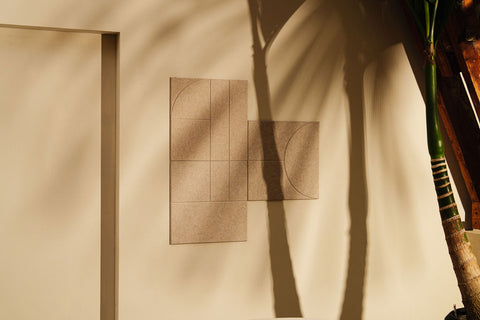
How do PET felt acoustic wall panels absorb sound?
Acoustic issues, such as reverberation and disruptive background noise, can significantly impact the atmosphere and functionality of a space. PET felt acoustic wall panels offer a stylish and effective solution for absorbing sound and creating a comfortable acoustic environment. But how exactly does this work? In this blog, we explain how PET felt absorbs sound and why these panels are a smart choice for various interiors.
What is PET felt?
PET felt is a sustainable material made from recycled PET bottles. Through a process of heating and compression, the plastic fibers are transformed into a sturdy and flexible felt with excellent acoustic properties. These fibers are porous. These small pores/holes absorb sound. Sound is neither amplified nor reduced. This material is not only eco-friendly but also lightweight, easy to install, and available in a variety of colors and designs. Whether you prefer Japandi or other interior styles, there’s a color to suit every taste.
The science behind sound absorption
Sound travels in the form of waves that are transmitted through air or other materials. When these sound waves bounce off hard surfaces, such as concrete, glass, or metal, reverberation occurs. This can result in unpleasant acoustics in spaces such as offices, restaurants, or living rooms, as well as in cafes, restaurants, gyms, and fitness centers.
PET felt acoustic wall panels operate based on three acoustic principles:
-
Sound absorption
- The open structure of PET felt ensures that sound waves are not reflected but instead penetrate the material, thereby reducing noise.
-
Sound propagation
- In addition to sound absorption, the structures of the felt panels help to diffuse and break up sound waves, creating a balanced and comfortable acoustic environment.
-
Reverberation Attenuation
- Installing PET felt panels in strategic locations, such as walls and ceilings, reduces reverberation and makes the acoustics in the room more pleasant.
Why are PET felt panels so effective?
PET felt has several properties that contribute to its sound-absorbing effectiveness:
✔ Dense yet breathable structure
The fibers of PET felt are tightly compressed, yet they contain small openings that absorb sound waves rather than reflecting them.
✔ Variable thicknesses for different frequencies
Thicker PET felt panels absorb a broader spectrum of sound waves, including low frequencies (such as deep voices and bass sounds), while thinner panels are effective at absorbing high frequencies (such as speech and the clinking of dishes).
✔ Flexible and modular design
’s PET felt panels can be combined in various sizes and shapes, depending on a room’s acoustic needs. Do you want to install the panels side by side or at an angle? You can install them horizontally, vertically, or diagonally.
✔ Sustainable and eco-friendly
Because these panels are made largely from recycled plastic, they are a more sustainable alternative to traditional sound-absorbing materials such as foam or mineral wool.
✔Suitable for any space
Acoustic panels can be used practically anywhere. Where do you spend a lot of time and are bothered by noise? We install these panels not only in living rooms or bedrooms at home, but also in waiting rooms—such as those at the dentist or doctor’s office—as well as in offices. Think of meeting rooms or individual workstations.
Would you like to see our acoustic tiles for yourself? Then stop by our showroom at Loods5 in Zaandam or at Woonindustrie in Nieuwegein!